
Early Learning Centre near Rouse Hill — Beaumont Hills, NSW
Many families looking for an early learning centre near Rouse Hill want something close enough for busy mornings, but also a place where their child feels settled, known, and comfortable coming back to each day.
Over The Hills Academy, located in nearby Beaumont Hills, cares for children from 6 weeks right through to school age. For many families, it becomes part of their weekly rhythm rather than just a drop-off point.
What parents often notice first isn’t a program or a policy — it’s the small things. A child being greeted by name at the door, educators crouching down to help with a goodbye cuddle, and children quickly finding their place in the room without hesitation.
How the Day Usually Feels for Children
Most children settle into a predictable rhythm, so the day feels familiar rather than overwhelming.
Mornings usually begin with quiet arrivals. Some children head straight to the reading corner or puzzles, while others prefer drawing at a table or simply sitting close to an educator for a few minutes before joining in.
As the morning unfolds, the room slowly comes alive. You might see a group of toddlers building together on the floor, while another group is outside riding bikes or exploring the sandpit. Some children drift between activities, coming back to favourites when they’re ready.
Around mealtimes, children sit together for lunch prepared onsite. It’s a calm moment in the day where they slow down, talk with friends, and reset before rest time.
After sleep and quiet rest, the afternoon often shifts into calmer play — storytelling, art, small group activities, or simply finishing off something they started earlier in the day.
Nothing is rushed. Some children stay deeply focused on one activity, while others move more freely depending on their energy and mood that day.
Meals, Routine and Daily Care
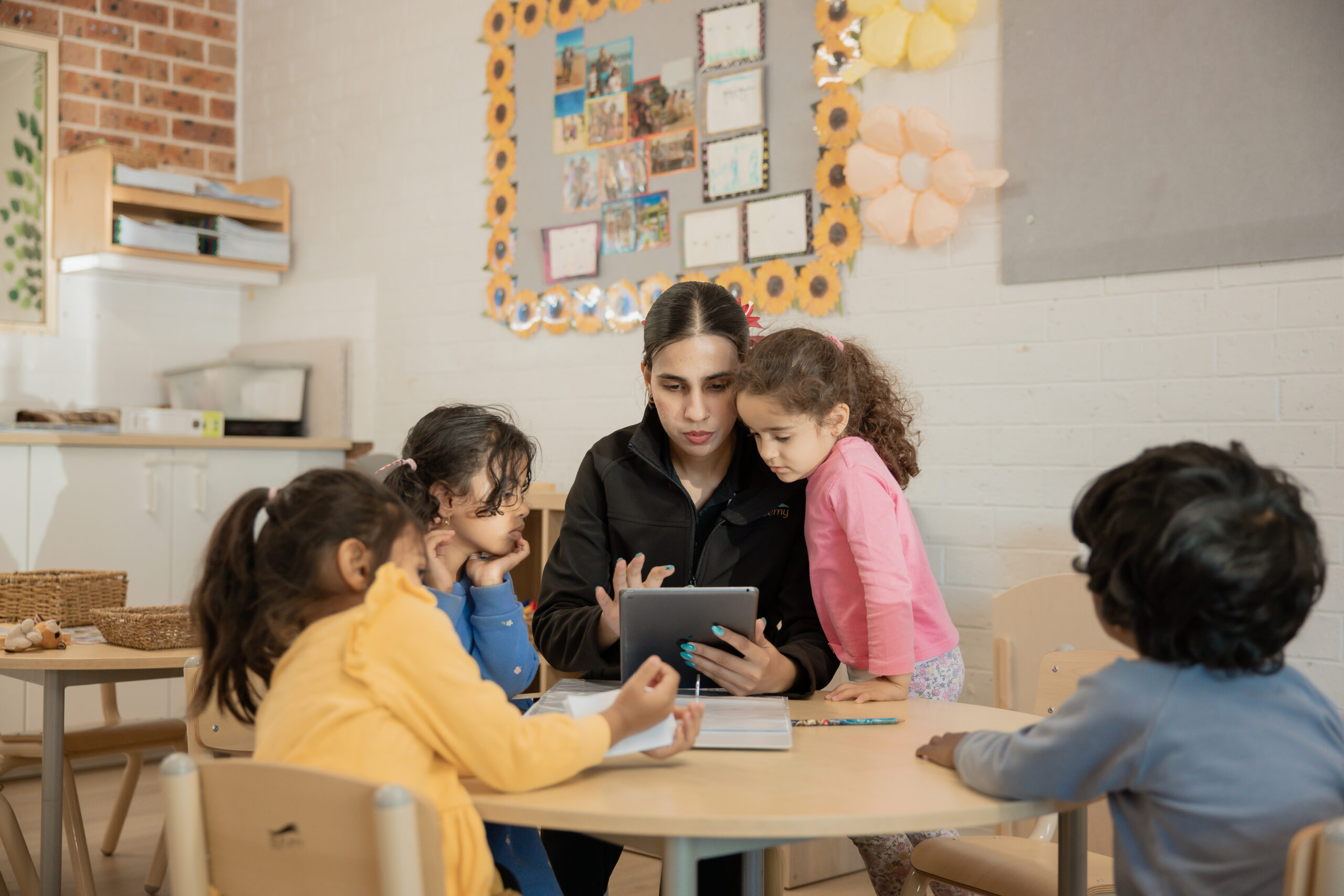
Meals are prepared onsite each day, so children sit down together for breakfast, lunch, and snacks as part of their routine.
Rather than being a break in learning, mealtimes are social moments where children talk about their day, practice independence, and learn simple habits like cleaning up after themselves.
Families also don’t need to pack everyday essentials like nappies or wipes, which makes morning routines a little easier and less rushed.
Babies, Toddlers and Preschool Learning
Babies (6 weeks to 2 years)
For babies, the day is shaped entirely around their own routines. Sleep, feeds, and comfort come first, with educators gently supporting each child’s needs.
You’ll often see educators sitting on the floor talking softly, making eye contact during bottle feeds, or offering sensory toys like soft textures, rattles, and gentle music. Over time, babies begin recognising familiar voices and spaces, which helps them feel secure and settled.
Toddlers
Toddlers are naturally curious, and much of their day reflects that energy.
One morning might involve messy play with paint or water, while another might be filled with music, dancing, and story time. Outside, they might be climbing, running, or learning how to take turns on bikes.
There are also moments where learning is less structured — figuring out how to share toys, playing alongside others, or watching what friends are doing before joining in themselves. These small social moments are just as important as organised activities.
Preschool (3–5 years)
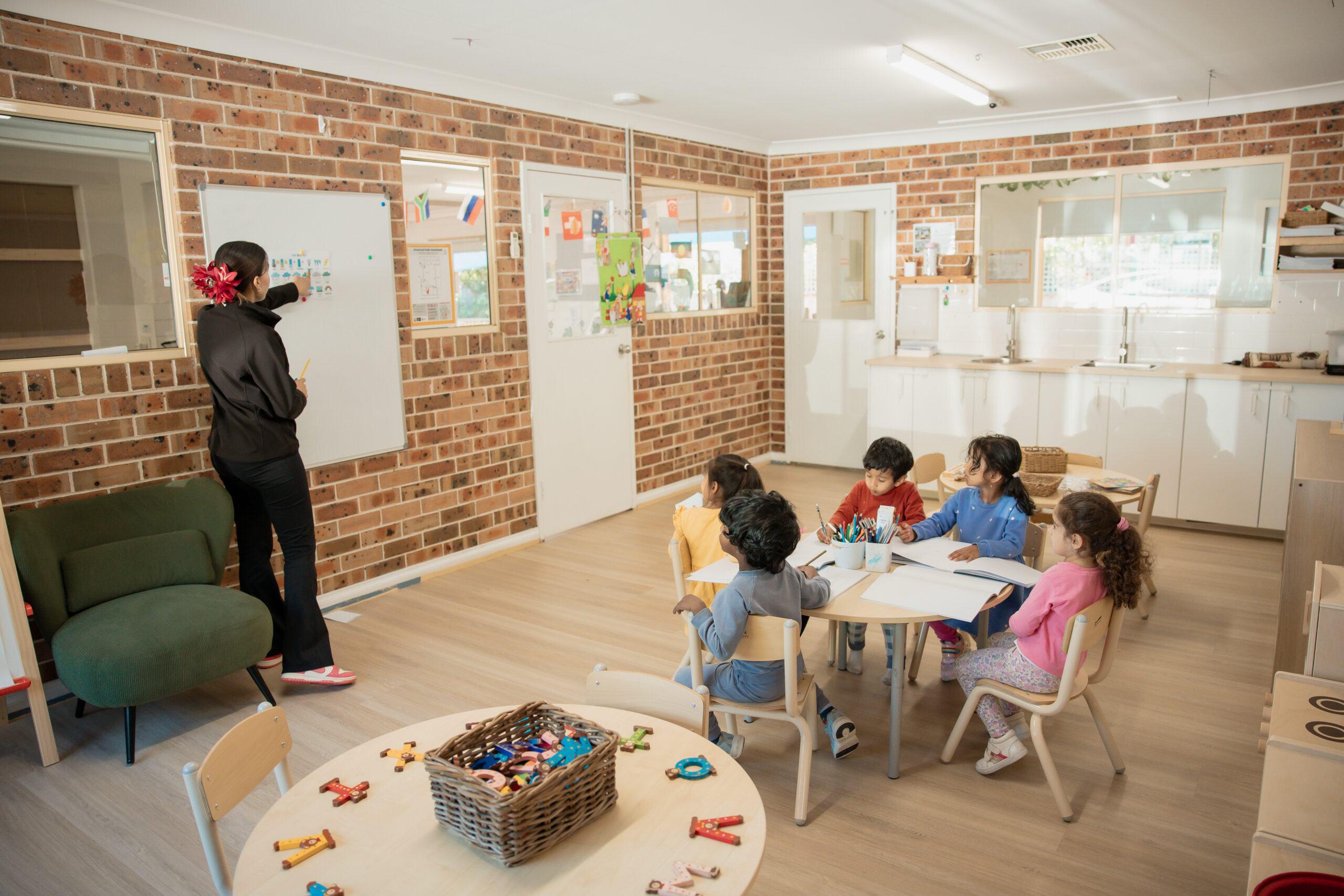
In the preschool room, children begin engaging more intentionally with early learning experiences.
This includes Reading Eggs literacy activities, smartboard learning, early numeracy games, group discussions, and storytelling. Alongside this, there’s plenty of time for creative projects like painting, construction, and imaginative play.
You’ll often see children working together on shared tasks — building something as a group, discussing ideas during circle time, or helping each other complete simple learning challenges.
These experiences help children become comfortable with structure and build confidence for the transition into primary school.
School Readiness Program
The school readiness program focuses on more than just early academics.
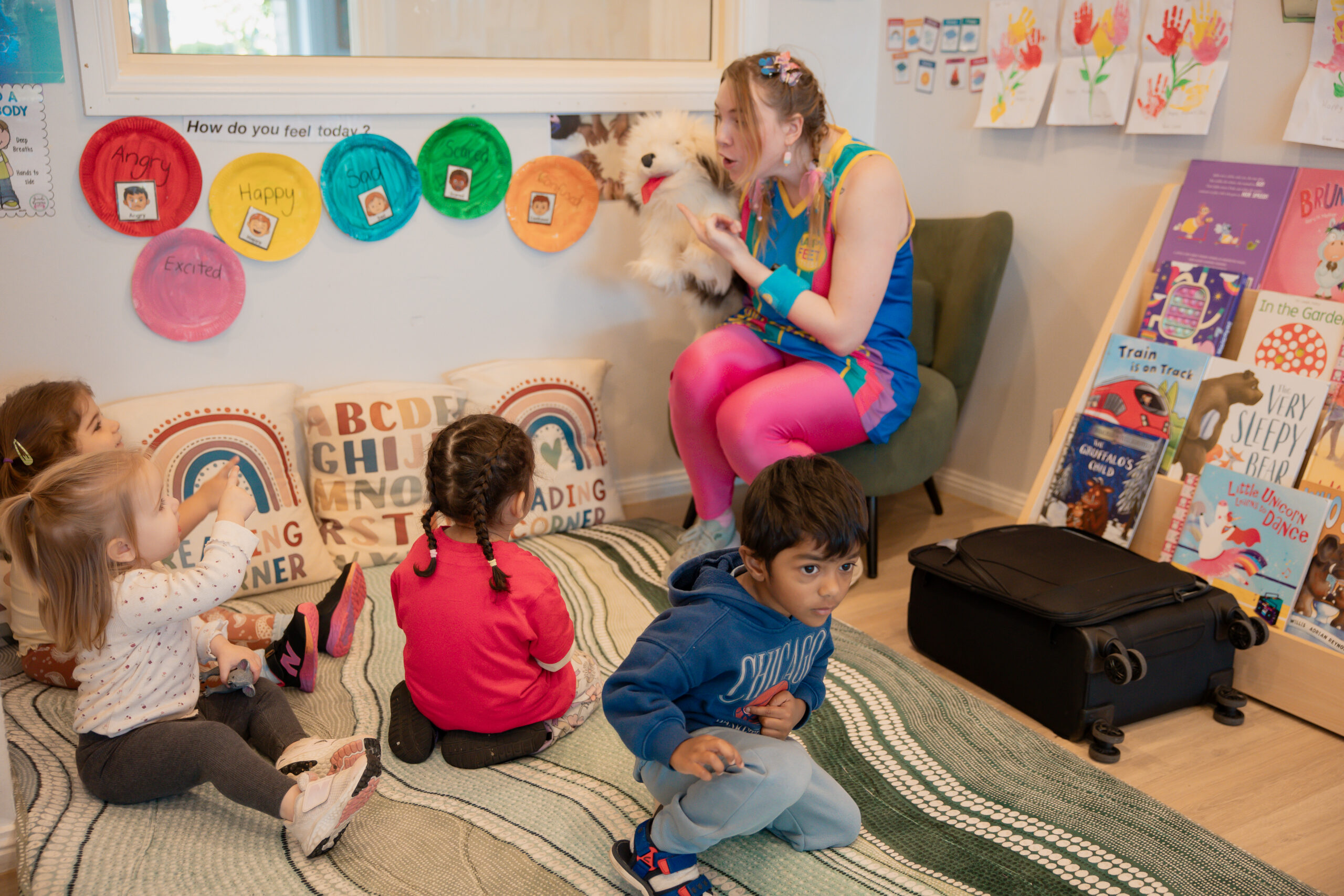
Children practice things like following group instructions, managing simple routines, asking for help when needed, and learning how to work alongside others in a group setting.
You’ll often see them sitting together during group learning time, raising hands to share ideas, or completing small tasks independently before moving on to the next activity.
By the time they leave for school, the idea of a classroom feels familiar. They already understand routines, expectations, and how to be part of a larger group — which helps the transition into kindergarten feel much smoother.
Learning Spaces and Outdoor Play
Inside the centre, rooms are designed to feel open and flexible rather than structured like traditional classrooms.
Children naturally move between different areas — reading corners, creative tables, building spaces, and quiet zones — depending on what they’re drawn to at the time.
Outside, the environment is active and constantly changing. Children climb, run, dig, balance, ride bikes, and play group games. Sometimes it’s energetic and loud, other times it’s calm and focused.
Outdoor play is not treated as a break from learning. It’s where children often test ideas, solve problems together, and build confidence through movement.
Communication with Families
Families receive regular updates throughout the day covering meals, sleep, and activities.
Rather than occasional check-ins, communication is ongoing, so parents have a clear sense of how their child is settling in and what they’ve been enjoying during the week.
For many families, this consistency helps build trust and makes the transition into care feel more comfortable over time.
Why Families from Rouse Hill Choose Over The Hills Academy
Being located in Beaumont Hills means the centre is only a short drive from Rouse Hill, which makes drop-offs and pick-ups easier for working families.
Parents from Rouse Hill, Kellyville, The Ponds, and Box Hill often choose Over The Hills Academy because children settle into familiar routines quickly and develop genuine relationships with educators over time.
Rather than feeling like they’re starting over each term, children become familiar with their environment, their peers, and the educators who support them each day.
Book a Visit
The best way to understand the centre is to visit in person.
Families are welcome to tour the rooms, watch how children move through their day, and meet the educators who will be supporting their child.
Most parents say that seeing the environment firsthand makes it much easier to picture how their child will settle in.
Phone: 02 9629 6799 / 02 9629 5944
Email: info@overthehillsacademy.com.au
Frequently Asked Questions
The Child Care Subsidy (CCS) is a government program that helps reduce childcare fees for eligible families. The amount depends on family income, activity level, and hours of care. Our team can explain the basics, while applications are completed through Services Australia.
If a child becomes unwell, educators contact families straight away. The child is cared for in a quiet, supervised space until they are collected.
Families usually pack a hat, spare clothes, a comfort item if needed, and bottles or formula for younger children. Everything else needed for the day is provided.
Settling in is supported gently and gradually. Educators follow each child’s cues, keep routines consistent, and allow time for them to adjust at their own pace.
Yes, families are welcome to speak with educators at drop-off and pick-up, and receive updates whenever needed.
Children are supported calmly and respectfully, with educators helping them understand emotions, routines, and boundaries. Families are included if additional support is needed.>